Thinking about buying a vacant lot in Whitewing at Higley and building your own home? The idea is exciting, but the land decides what you can build, how long it takes, and what it costs. You want clarity before you commit.
This guide walks you through the key feasibility checks for Whitewing at Higley in Maricopa County, including jurisdiction, zoning and CC&Rs, utilities, soils and drainage, permits, timelines, costs, and financing. Use it as a quick blueprint to stress-test any lot before you write an offer. Let’s dive in.
Start with jurisdiction and parcel facts
Confirm where the lot sits administratively. Determine if the parcel is inside the City of Maricopa limits or in unincorporated Maricopa County. Jurisdiction controls planning rules, permit processes, fees, and often utilities.
Next, get the Assessor Parcel Number (APN). With an APN you can review assessed value, tax history, recorded ownership, and any recorded documents or liens. This anchors everything that follows and helps you avoid surprises later.
Zoning, CC&Rs and easements
Zoning and permitted uses
Pull the zoning designation for the parcel and read the allowed uses. Zoning sets setbacks, height limits, lot coverage, and whether accessory structures are permitted. Ask planning staff if any area plans, road projects, or rezonings could affect the parcel.
Easements and drainage
Identify all recorded easements, including utility, access, and drainage. Easements limit the buildable area and can steer where your driveway and house can sit. Look for any washes or drainage features that may trigger special engineering.
HOA and architectural review
Whitewing-style communities often include an HOA with CC&Rs and architectural review. Confirm dues, any special assessments, and design guidelines for materials, colors, fences, and landscaping. These rules can shape your design, timeline, and budget.
Utilities and infrastructure
Water and sewer
Confirm if municipal water and sewer are available to the lot. This is the simplest path to build. If not, you may need a private well and on-site septic, which require permits and site suitability. Some areas limit new septic systems, so get clear answers from the applicable providers and environmental health.
Power, gas and internet
Identify the electric provider serving the area and whether service is at the lot line or requires an extension. Do the same for natural gas and telecom. Line extensions and trenching can add meaningful cost, especially if soil conditions are challenging.
Roads and storm drainage
Check whether the lot fronts a public or private road and who maintains it. Ask what on-site drainage or retention will be required at permitting. Many sites need grading plans that tie your lot to the broader storm system.
Site conditions to evaluate
Topography and floodplains
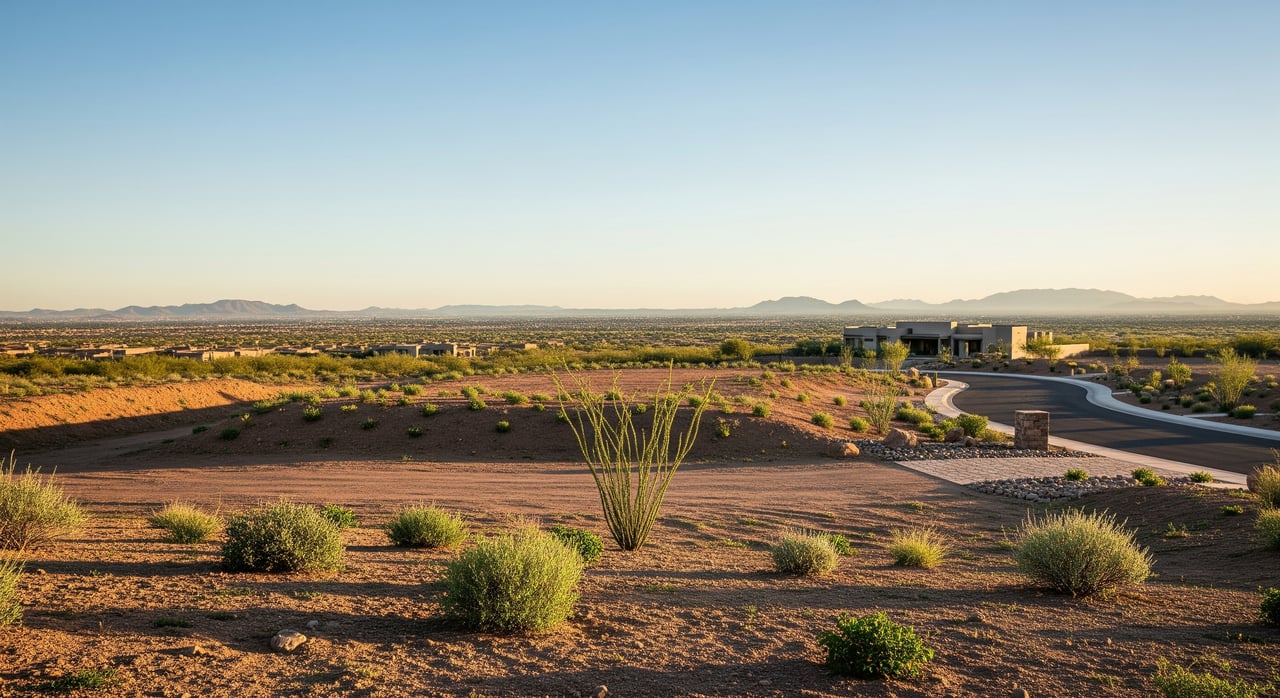
Flat desert lots can still collect water. Review whether any wash or ephemeral channels cross or border the parcel. Verify floodplain status through standard mapping resources. Lots in or near flood zones often require more engineering and can limit the buildable footprint.
Soils and geotechnical
Arizona soils can include expansive clays and caliche. A geotechnical report is commonly required and helps your designer and builder select the right foundation. Depending on findings, you may need soil remediation, deeper footings, or an engineered slab.
Utility placement and setbacks
Frontage utility easements can limit where you place the home, pool, and driveway. Underground trenching through hard soils can drive up costs, so factor this into early bids.
Permits, process and timeline
You will likely need a building permit, trade permits for electrical, plumbing and HVAC, grading approval, and possibly driveway and septic or well permits if applicable. Plan review timelines vary by jurisdiction and complexity.
Here is a typical high-level timeline:
- Title and due diligence: 2 to 6 weeks
- Design and plans: 4 to 12-plus weeks
- Plan review and permits: 2 to 12-plus weeks
- Site prep and utility hookups: 2 to 8 weeks
- Construction: several months to 12-plus months
Timelines extend if utilities need off-site extensions, if variances are required, or if soils and drainage demand extra engineering.
Costs and financing
Carrying costs
Beyond the land price, plan for property taxes, insurance, HOA dues, and loan interest if you finance the lot.
Development and soft costs
Budget for utility connection and capacity fees, building and inspection fees, grading and drainage work, driveways, fencing or walls, landscaping, and required engineering. HOA rules can add line items, such as specific wall types or landscape standards.
Financing options
Vacant land loans often require larger down payments and carry higher rates than traditional mortgages. Lenders may ask about your build timeline and utility access. Construction loans finance the build and typically include draw inspections and plan requirements. FHA and VA do not fund vacant land alone, but they can work for approved homes when construction meets program rules.
Your step-by-step feasibility checklist
- Confirm the parcel APN and whether it is in the City of Maricopa or unincorporated Maricopa County.
- Pull zoning and land-use rules and ask planning staff about pending changes.
- Review tax records and check for special assessments tied to the parcel.
- Obtain CC&Rs and HOA contact info to confirm dues and design guidelines.
- Order a preliminary title report and a current plat or survey to reveal easements.
- Check flood maps and identify any washes or drainage features.
- Confirm water and sewer availability and request connection fee estimates.
- Contact electric, gas, and telecom providers about service and extension costs.
- Order a geotechnical report and a topographic survey before finalizing plans.
- Get preliminary builder estimates and discuss foundation options based on soils.
- Talk to lenders about land and construction loan requirements and costs.
- Budget for permit fees, impact fees, site prep, and HOA-driven improvements.
Risk checkpoints and how to mitigate
- Unknown easements or deed restrictions: Order a current title commitment and survey.
- Utility extensions or capacity limits: Get written availability confirmations and quotes.
- Expansive soils or caliche: Complete a geotechnical investigation early and plan for engineering.
- Floodplain or wash constraints: Verify mapping and consult a civil engineer for drainage design.
- HOA rules that add cost: Review CC&Rs and design guidelines before you write an offer.
- Financing limits for vacant land: Engage lenders early and prepare for higher down payments.
Partner with a team that knows land
If you are eyeing a lot in Whitewing at Higley, a fast, structured feasibility review will protect your budget and timeline. Our boutique team blends luxury brokerage with development advisory, so you get clear answers and a viable path to your custom home. We can help you source the right lot, coordinate due diligence, connect you with local surveyors and engineers, and align you with a builder who fits your vision.
Ready to evaluate a specific parcel or line up your next steps? Reach out to the Smith Team for a tailored feasibility plan.
FAQs
Can I build a home on a Whitewing at Higley lot?
- Verify zoning, confirm utilities, review easements and floodplain status, and obtain a preliminary geotechnical opinion to confirm feasibility and potential mitigation.
Will I need septic or a well for a Whitewing lot?
- Only if municipal water and sewer are not available to the parcel; confirm with the local providers and environmental health before closing.
How long from lot purchase to move-in for a custom home?
- A realistic range is 9 to 18 months depending on design time, permit review, utility work, site conditions, and builder schedule.
What hidden costs should I expect on a vacant lot?
- Utility connection fees and extensions, grading and drainage plans, geotechnical work and foundation upgrades, permit and impact fees, and HOA-driven improvements.
How do I reduce risk before I buy a lot?
- Order a title report and survey, confirm utilities in writing, run flood and drainage checks, obtain a soils report, and review HOA CC&Rs and design rules early.