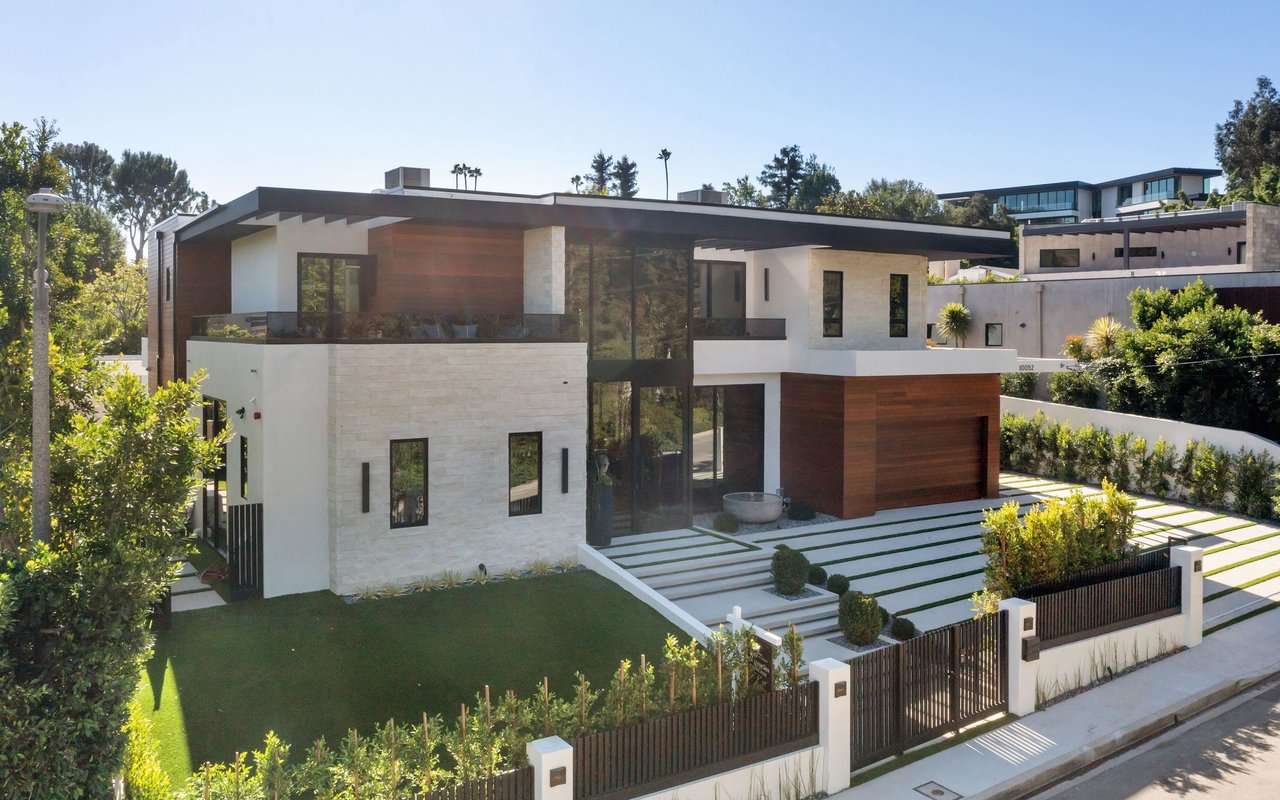
Are you trying to make your North Scottsdale home feel cooler without sacrificing the look and flow you love? That is a real challenge in a place where summer heat is not occasional, but part of daily life. The good news is that smart desert design can improve comfort, protect outdoor living, and support long-term value. Let’s dive in.
Why summer comfort matters in North Scottsdale
Summer design decisions matter more here because the climate is intense for months at a time. NOAA climate normals for Scottsdale Municipal Airport show average daily highs of 102.0°F in June, 104.1°F in July, and 102.9°F in August, with just 8.73 inches of annual precipitation.
In practical terms, that means your home is not only battling hot air. It is also dealing with strong sun, radiant heat, and long afternoons that can overwhelm glass, patios, and hardscape. In North Scottsdale, comfort starts with design choices that reduce heat gain before your cooling system has to work harder.
Start with shade first
If you want one guiding principle for summer comfort, make it shade. Scottsdale’s design guidance and local heat-planning efforts both point to shade as a core strategy for creating cooler, more resilient homes and outdoor spaces.
That idea is especially important in luxury desert homes, where large windows, open patios, and pool areas are part of the lifestyle. The goal is not to close a home off from the landscape. It is to shape light and sun exposure so your spaces stay usable through the hottest months.
Plan shade by window direction
Not all sunlight hits a home the same way. Scottsdale organizes its shading guidance by exposure, and that framework is useful because each side of the home behaves differently in summer.
South-facing glass is usually the easiest to manage. Scottsdale notes that south-facing windows can be shaded effectively while preserving views, and this orientation can work well when overhangs or other exterior shading features are planned correctly.
East- and west-facing glass is usually the hardest to control. Low-angle morning and afternoon sun can create glare and significant heat gain, and overhangs alone often do not block it well.
North-facing windows are not automatically worry-free in the desert. Scottsdale notes that they still need shade because summer sun rises north of east and sets north of west.
Use exterior shading where it counts
For everyday comfort, exterior solar control usually does more than interior décor alone. Practical options mentioned in the research include:
- Overhangs
- Awnings
- Exterior blinds
- Trellises
- Arbors
- Retractable shade systems
- Open-weave shade fabric
Inside the home, operable coverings still help. DOE recommends keeping window coverings closed during the day in summer, with options like shades, blinds, screens, draperies, curtains, and shutters helping reduce unwanted heat.
Make outdoor rooms usable in summer
In North Scottsdale, outdoor living is part of how people enjoy a home. But uncovered seating areas can become difficult to use when surfaces heat up and direct sun lingers into the evening.
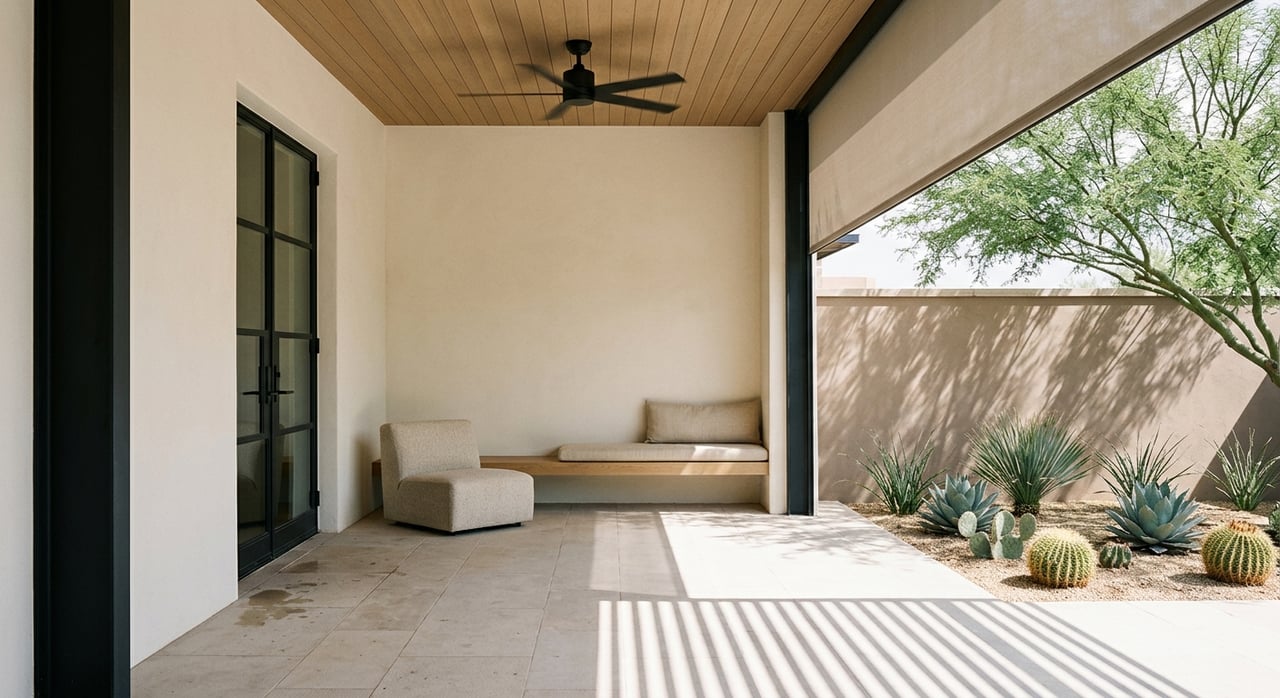
Scottsdale’s guidance for entrances and outdoor living spaces emphasizes shade structures that still allow air and rain to pass through. That includes courtyards, trellises, arbors, retractable shade, and open-weave fabric.
Treat the patio like a real room
A shaded patio performs better when it is designed as an outdoor room, not just leftover space off the back of the house. That means thinking about seating zones, dining areas, transitions from indoors, and how air moves through the space.
Covered and semi-covered areas can also create a more comfortable edge between the house and the yard. In high-heat months, that buffer can make the inside of the home feel calmer and less exposed.
Give pool areas their own comfort plan
Pools cool the look of a yard, but the deck around them can still feel harsh in full summer sun. A smarter approach is to treat lounge areas and seating edges like outdoor living zones that need dedicated shade and airflow.
Based on Scottsdale’s guidance, that can mean using trellises, retractable structures, or other shade features that help make the poolside experience more comfortable while still fitting the open desert aesthetic many North Scottsdale homes aim for.
Choose glass and finishes that help
Homes with large expanses of glass can look stunning, but they need the right materials to perform well in desert heat. Scottsdale’s glazing guidance points to reflective glazing and low-e glass as tools for controlling heat.
That matters because comfort is not just about the thermostat setting. It is also about whether rooms near windows feel balanced, whether glare is reduced, and whether the home stays bright without feeling overheated.
Build a better comfort stack
DOE describes a hot-weather comfort stack that includes:
- Insulation
- Efficient windows and doors
- Daylighting
- Shading
- Ventilation
This works well as a design lens for North Scottsdale homes. Rather than relying on one feature to solve everything, the best results usually come from layers that work together.
Don’t overlook roof performance
In Arizona, the roof plays a major role in heat gain. According to ENERGY STAR, a white reflective roof can run about 50°F cooler than a darker roof on a sunny afternoon.
DOE also notes that radiant barriers are primarily useful for reducing summer heat gain in hot climates. For homeowners planning updates or evaluating a property, roof and attic performance can be an important part of overall summer comfort.
Add simple airflow improvements
Some comfort upgrades are straightforward. DOE recommends running ceiling fans counterclockwise in summer to create a cooling breeze.
That will not replace shading or strong building performance, but it can improve how a room feels day to day. In large living spaces and covered patios, airflow is often part of what makes the space actually usable in July and August.
Cool the lot with desert-smart landscaping
Landscape design has a direct impact on how a home feels. In Scottsdale, the city’s environmental and water resources emphasize shade, trees, water stewardship, and Arizona-friendly planting as part of a cooler, more resilient approach.
That is why desert-adapted landscaping should not be viewed as a compromise. Locally, it is presented as a practical way to conserve water while creating more comfortable outdoor spaces.
Think of shade as infrastructure
Scottsdale’s Shade & Tree Plan treats shade as infrastructure. Its focus includes maintaining existing shade, increasing shade where needed, and integrating trees, water harvesting, and shade structures into private sites and public spaces.
For a homeowner, that supports a very practical takeaway. Mature shade, strategic tree placement, and thoughtful structures are not just aesthetic upgrades. They can shape how hot a yard feels, how enjoyable a patio becomes, and how welcoming the home is during peak summer.
Skip the turf-heavy mindset
A finished luxury yard in North Scottsdale does not need large expanses of turf to feel complete. Scottsdale’s Xeriscape Garden highlights Arizona-friendly plants, trees, water harvesting, and plant care as part of water-wise landscape design.
With more than 7,000 Arizona-friendly plants and 200 species featured there, the local message is clear. You can create polished, high-end outdoor spaces that feel rooted in the Sonoran Desert while also supporting comfort and water-conscious design.
What this means when buying or updating a home
If you are shopping for a home in North Scottsdale, summer comfort is worth evaluating with the same care you give layout, finishes, and views. A beautiful house can still feel challenging in July if glass, shade, and outdoor areas were not planned well.
Look closely at window orientation, covered patio depth, poolside shade, roof performance, and whether the landscape creates real relief from heat. Homes that handle these details well often feel better immediately, not just on paper.
If you already own a home, small changes can still make a meaningful difference. Shade systems, better window management, ceiling fan settings, selective planting, and material upgrades can all help support a more comfortable summer experience.
In a market like North Scottsdale, design quality and livability often go hand in hand. Homes that respond well to the desert climate tend to offer a better everyday experience and a stronger sense of long-term care.
If you are thinking about buying, selling, or evaluating a home through the lens of comfort, design, and value in North Scottsdale, Smith Real Estate can help you look beyond surface finishes and focus on the details that matter.
FAQs
What is the biggest summer comfort upgrade for a North Scottsdale home?
- Shade is the biggest move because local guidance emphasizes exterior shading, solar control, and ventilation as key tools for reducing heat gain and improving comfort.
Do north-facing windows need shade in North Scottsdale?
- Yes. Scottsdale’s shading guidance says north windows still need shade in hot climates because of the summer sun path.
Are east- and west-facing windows harder to manage in summer?
- Yes. Scottsdale notes that east- and west-facing glass is the hardest to control because low-angle sun can cause glare and strong heat gain.
How should you design a pool area for summer comfort in North Scottsdale?
- Treat it like an outdoor living zone by shading seating edges and lounge areas, while also allowing airflow and planning for seasonal rain.
Does a luxury desert yard need a lot of turf to feel finished?
- No. Scottsdale’s local landscape and water resources emphasize Arizona-friendly planting, shade trees, and water-wise design as strong fits for the area.
What materials help reduce heat in a North Scottsdale home?
- Reflective glazing, low-e glass, cool roof strategies, radiant barriers in hot-climate applications, and layered shading all support better summer performance.