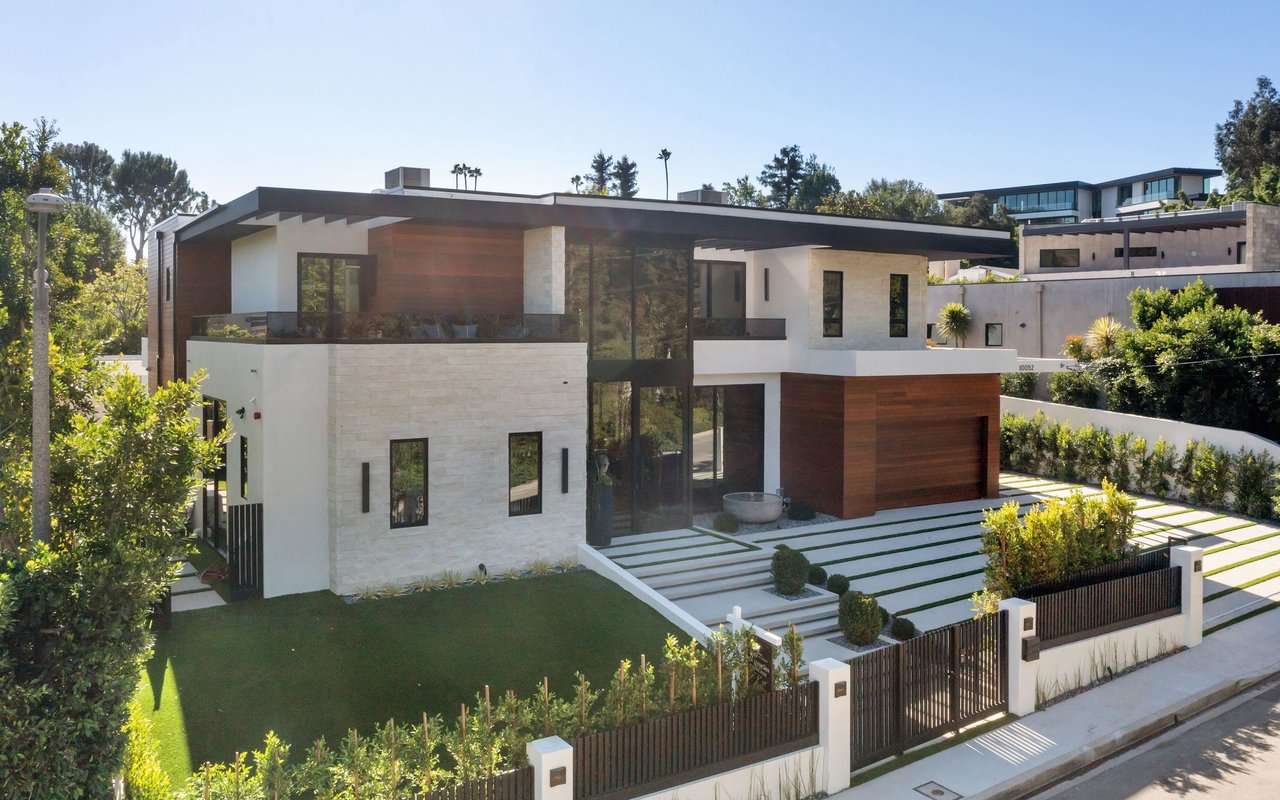
On July 9, 2026, a 20,919-square-foot spec estate at 5531 East Mockingbird Lane closed all-cash for $40.24 million, breaking the Arizona sale price record set only seventeen months earlier. That same quarter, older financed homes over $3 million with a build date of 2019 or earlier and between 3,000 and 8,000 square feet were closing at roughly $795 per square foot, down about 5% from April 2024.
Both prints happened inside the same one-square-code town. Both counted toward the same median. And that is exactly the problem for anyone shopping Paradise Valley from a portal.
One median, two markets
Buyers comparing 85253 to Arcadia or North Scottsdale usually arrive with a single number in hand. In June 2026 that number was a $5.25M median list and roughly $4.6M to $5.2M on the sale side depending on the window. It is a useful headline and a poor compass, because the town is behaving like two markets stacked on top of each other.
At the top, the trophy tier is setting records. New-build hillside product is trading at $1,400 to $2,000 per square foot, and a modern estate at 5641 North Casa Blanca Drive traded for $20.9 million all-cash at roughly $1,798 per foot. The Mockingbird Lane record put the town in direct conversation with Miami and Los Angeles at the top end.
Underneath, the older financed segment is softening. Town-wide per-square-foot averages sat at $987 in May 2026, up from $951 in April, but the aging inventory below the trophy line is not participating in that lift. That is roughly a 2.4x spread between the softest and strongest ends of the same market, in the same quarter, inside the same ZIP.
| Segment | $ / sq ft (Q2 2026) | Typical buyer | Financing |
|---|---|---|---|
| New-build trophy, hillside | $1,400 – $2,000+ | Out-of-state relocator, spec buyer | All-cash |
| Recent custom, view lot | ~$1,044 average, new builds above $2,000 | Move-up primary or second home | Cash or jumbo |
| Older resale, 2019 or earlier, 3–8k sq ft, over $3M | ~$795 | Traditional luxury buyer | Financed, appraisal-sensitive |
Why one ZIP hides so much
Paradise Valley was incorporated in 1961 to preserve large-lot residential character against annexation by Phoenix and Scottsdale. It uses a single ZIP, 85253, holds roughly 5,800 households, enforces a one-acre minimum lot rule, and prohibits commercial development outside a small set of grandfathered resorts. That surface uniformity is what makes the split underneath easy to miss.
Transaction volume amplifies the illusion. While Scottsdale and Phoenix close 800 to 1,000 single-family homes per month each, Paradise Valley closes roughly 40 to 60. A handful of trophy trades can drag the town-wide median around in ways that mean nothing to a buyer shopping the middle. A $40M close on Mockingbird Lane tells you very little about a 1988-vintage 5,000-square-foot flat-lot home two miles north.
Inventory is also unusually loose for the town. Active 85253 single-family listings sat at 431 in June 2026, up roughly 42% from 304 in April, pushing months of supply to 10.3 and days on market past 120 on the arizonahomesandcondos.com report. That is buyer-favorable territory in the aggregate, and it is masking the fact that the trophy tier is still selling quickly and often before it ever hits the MLS.
A field guide to the corridors
The town's single ZIP flattens a set of very different sub-markets. Knowing which one a target address sits in matters more than the town-wide median.
- Casa Blanca corridor. Trophy tier, spec-built, largely off-market. Twelve homes on Casa Blanca Drive have sold above $8M in the past three years, and developers watch the street for pre-list opportunities.
- Camelback Country Club Estates. Anchored on Tatum Boulevard around the historic Paradise Valley Country Club. One-acre lots, mature landscape, inventory ranging from 1960s ranch originals through significant new custom builds.
- Cheney corridor. Central, flat, walkable. 1950s and 1960s originals that often trade as land plays for new custom construction.
- Camelback Country Estates and the Cherokee corridor. Rising demand in 2026 for organic-modern architecture on established lots.
- Guard-gated enclaves. Clearwater Hills, Finisterre, Judson Estates, Azure at Ritz-Carlton, and Paradise Reserve carry HOA dues that fund private gate staffing and shared landscape. Foothill positions inside these enclaves command a 20% to 35% premium over flat interior lots.
Two addresses on the same tax roll can produce completely different negotiations depending on which corridor they sit in. That is the friction most portal shoppers never see.
The teardown math no one shows you
The clearest place the two markets meet is on paper, at the closing table for a land play. In mid-2026 the numbers looked roughly like this on a typical Cheney-area flat lot:
- Land-only teardown acquisition: $2.0M to $3.0M
- Custom build at Arizona luxury pricing of $300 to $550+ per sq ft, before land and site prep
- Total custom build budget: $5.0M to $7.0M
- Finished asset: $8M to $12M
That is a workable spread for a builder or a well-advised end user, but it sits well below the $15M+ trophy tier where the record-setting cash trades happen. Two things determine whether a specific parcel makes that math work: what the site can support under town rules, and where in the sub-market the finished product lands.
The site rules do real work here. R-43 zoning requires a 43,560-square-foot minimum lot, 165 feet of width, and a 25% floor-area ratio, with fully subterranean basement portions excluded from FAR. Height is capped at 24 feet on lots under three acres, 26 feet from three to under four acres, and 30 feet at four acres and larger, with additional massing limits tied to an imaginary plane. A demolition permit is required before the building permit whenever more than 12 linear feet of wall or 12 square feet of roof will be removed. Hillside-designated lots pick up a separate review by the Hillside Building Committee for new homes, remodels, additions, pools, solar, and accessory structures.
None of those constraints show up in a median price. All of them determine whether a lot pencils.
What this changes about your offer
Two practical shifts follow from reading Paradise Valley as two markets rather than one.
First, price against like-kind comps in your micro-pocket, not the town-wide median. A Cheney-corridor teardown at $795 per foot is the comp for another Cheney-corridor teardown. A Casa Blanca new-build at $1,798 per foot is the comp for another hillside trophy. Mixing them produces bad offers in both directions.
Second, read a six-to-twelve-month window for your price band. Because volume is thin, a single quarter can swing on one or two trades. Katrina Barrett of Local Luxury / Christie's International, who represented both the July 2026 Mockingbird Lane record and the February 2025 Casa Blanca record, put the top-end read plainly to the Phoenix Business Journal:
Two-thousand dollars a foot is the new standard.
That is a real signal for the trophy segment. It is not a signal for the 1988 flat-lot resale two miles away. The financed pool there still feels the pull of a 30-year fixed near 6.0%, and it still has to clear an appraiser working from older comps.
FAQ
Does the record sale mean prices are rising across Paradise Valley? Not uniformly. Top-quartile Phoenix-metro single-family prices rose 6.2% year over year in 2026, while lower tiers were essentially flat between 0% and 1.9%. Inside 85253 that pattern shows up as trophy strength and older-resale softening at the same time.
Should a buyer wait for a bigger correction? The town's supply-capped structure argues against expecting one at the top. The one-acre minimum, the ban on commercial development, and continued wealth migration from higher-tax states keep the trophy tier insulated. The older financed tier is where negotiation room actually exists right now.
Is the teardown path always the right move on an older home? No. It works when the lot itself is the asset and the buildable envelope supports what today's buyer expects. It does not work on awkward geometries, tight setbacks, or Hillside-review parcels where added review time and design constraints erode the spread. That call belongs on a parcel-by-parcel basis, not on a rule of thumb.
Working with the split
Reading Paradise Valley as two markets changes what a good offer, a good listing price, and a good land play look like. It also changes who you want in your corner. The team at SMITH Real Estate works both sides of the split, from resale representation in Cheney and Camelback Country Club Estates to feasibility and land-advisory work for builders eyeing the Casa Blanca and Cherokee corridors through Sasquatch Development Group.
If you are weighing a purchase, a sale, or a lot in 85253 right now, request a market valuation and we will read your specific corridor against the current data, not the headline median.